Blog
How to Get Back in Shape After 40 (From a Bloke Who's Done It Three Times)
I’ve lost the same fifteen kilos three times. At 30, at 40, and at 46. I tell you that up front not as a confession but as the reason you should keep reading: I’m not a coach who got lean once at 25 and never had to think about it again. I’m a nine-to-five worker who drifted out of shape, came back, drifted again, and came back again. The drift is near-universal after 40, and so is the comeback — if you’ve got the right trigger and a plan built for the life you actually live.
This is that plan, with my real numbers attached.
That chart is mine. Three peaks, three returns. If you see your own pattern in it, you’re in the right place.
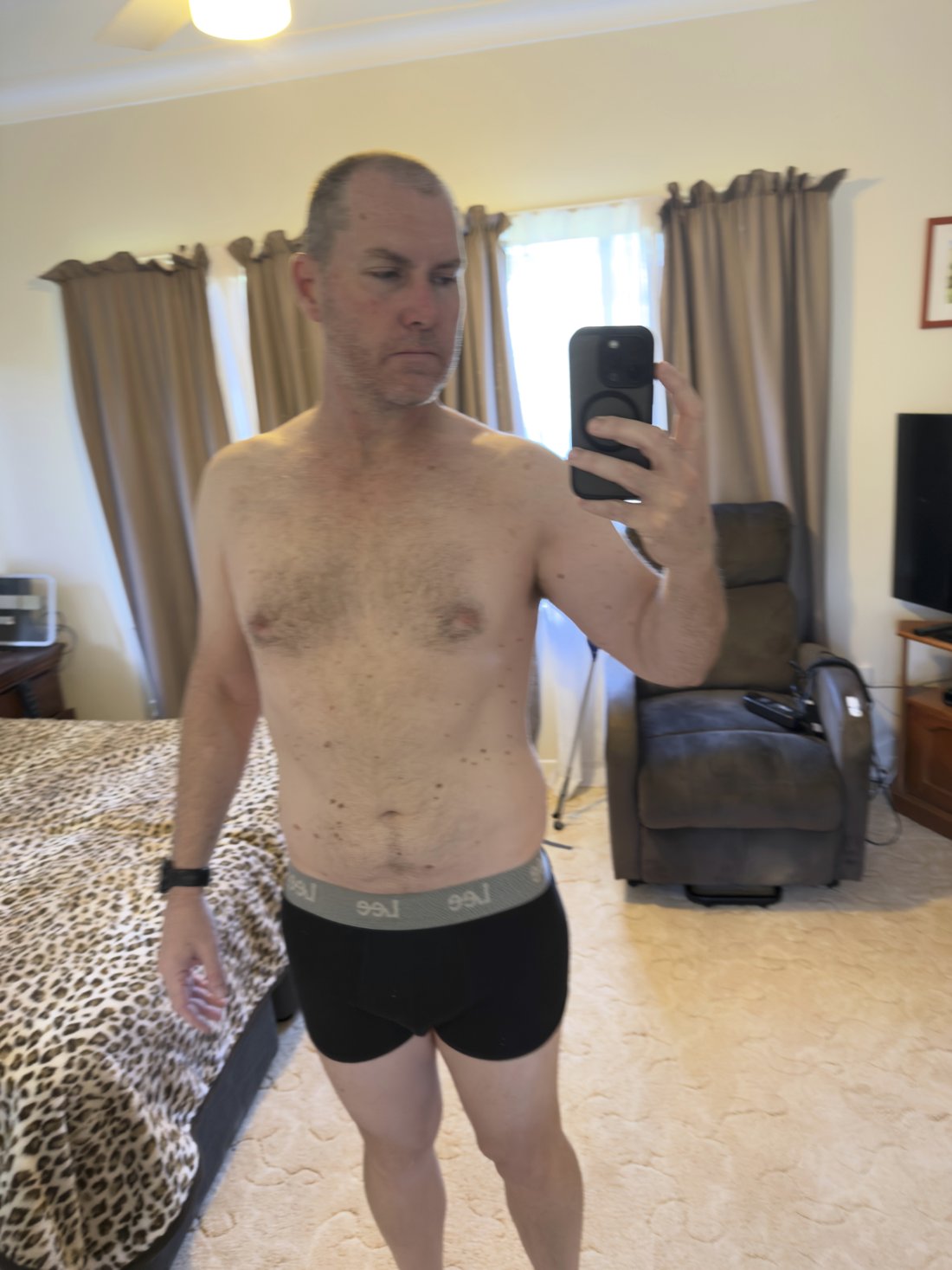
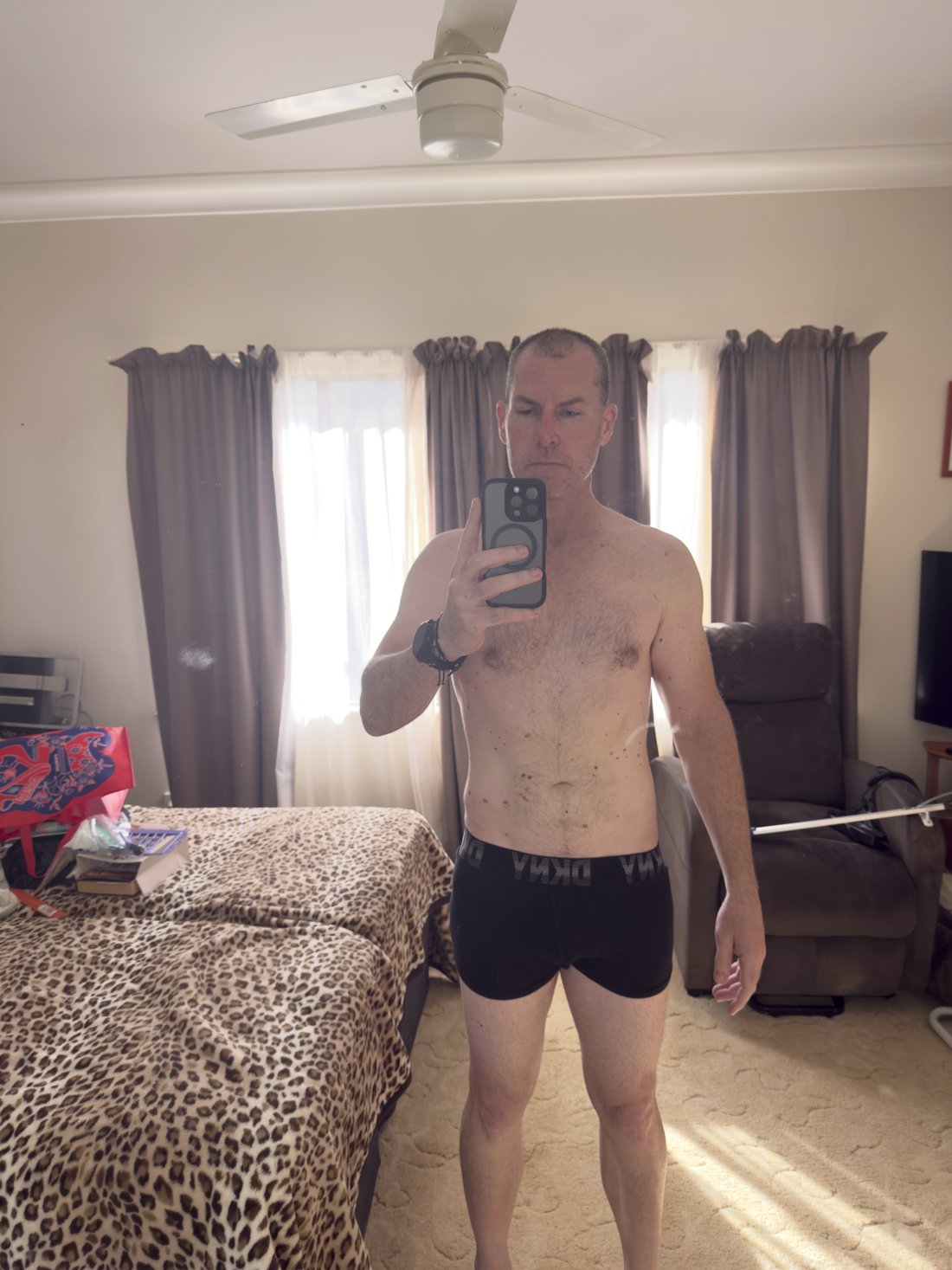
Same bedroom, same mirror, five months apart. Let me walk you through how to get back in shape after 40 without a six-day split, a food scale, or a personality transplant.
Why your old routine stopped working after 40
First, the honest part. It is harder after 40, and it is not in your head.
A few things change, all at once and all quietly:
- You lose muscle. From your mid-30s you shed roughly 3–5% of your muscle every decade if you do nothing about it — a process called sarcopenia. Muscle is the engine that burns calories at rest, so losing it slows everything down.
- Hormones drift. Testosterone slides gently year on year, which blunts how easily you build muscle and recover.
- Recovery gets slower. The session you could do hungover at 28 now needs a proper night’s sleep on either side of it.
- Food hits differently. The same beers and the same takeaways land harder than they used to, because the engine underneath has shrunk.
- A desk keeps you in a chair. Most of us added a career, a mortgage and a couple of kids somewhere in here. The day got fuller and the movement got squeezed out.
None of that makes you broken or lazy. It makes you normal, and it means the plan has to account for all of it or it falls apart by week three. The fitness industry mostly ignores this, because most of its advice is written by people who live in the gym — the gym-bros who train for a living and make it look easy because it’s their whole life. That advice is built for a 25-year-old with no other commitments. You are not that, and you don’t need to be.
What actually works: three levers, and sleep underneath
Here is the entire method, and it has not changed across three comebacks. Three levers, with sleep as the multiplier under all of them. No gimmicks, no shortcuts baked into the plan.
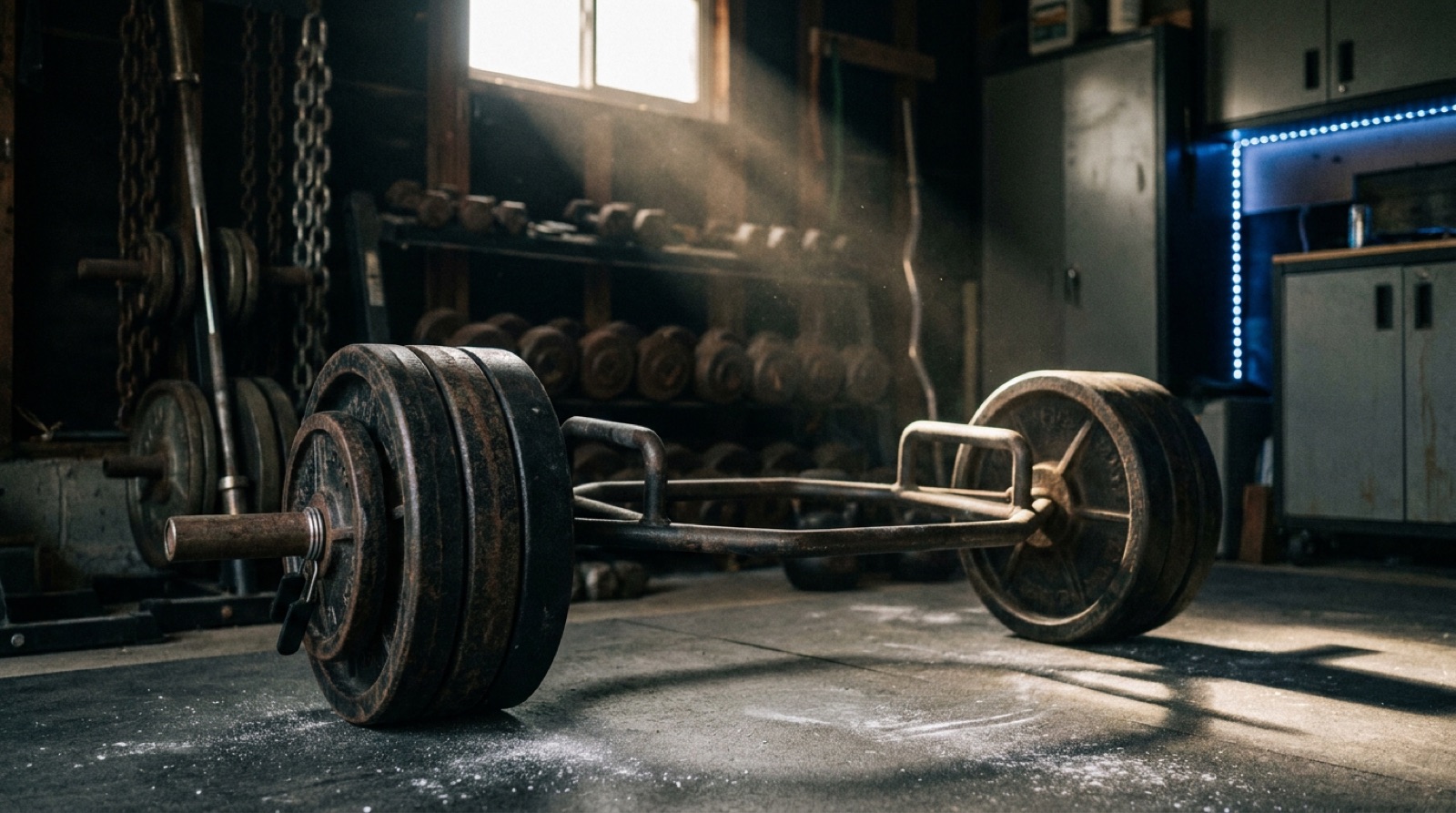
1. Train three days a week, full-body, joint-friendly. Not six days. Three. Full-body sessions built around big, simple lifts. I train with a trap bar rather than a straight bar because I’ve got multiple bulging discs and the trap bar is kinder to a dodgy back — which is the point. I work at roughly RPE 8, meaning I leave two reps in the tank rather than grinding to failure. After 40, training to failure mostly buys you soreness and a missed session, not muscle. Three honest sessions you actually do beats six perfect ones you quit by February.
I’ve laid out the exact 3-day full-body plan here, including a sample week.
To the question everyone asks — yes, you can build muscle after 40. Not as fast as a teenager, but the response is absolutely still there. Strength training is also the closest thing you have to a pension for your body: it holds muscle, defends your bones, and makes carrying the shopping and playing with your kids easier for decades.
2. Eat protein-first, no food scale. I don’t weigh food and I never have. I put protein first at every meal — a palm or two of meat, fish, eggs, yoghurt — and let it crowd out the rubbish. Protein keeps you full, protects your muscle while you lose fat, and is the one nutrition lever that survives a busy week. No tracking app, no weighing, no plan that collapses the first time you eat at a pub.
3. Support it with a short, evidence-graded supplement stack. Not a cupboard full of hope. A handful of things with actual evidence behind them, chosen against a blood test rather than a podcast. I’ve written about exactly what I take and why, including the boring ones that earned their place by moving a number.
Underneath all three: sleep. This is the multiplier, and it’s the one people skip. When my sleep falls apart, everything else gets harder — appetite, recovery, mood, the lot. I track it, and I treat a bad run of sleep as a problem to fix, not a personality trait. I’ll come back to why that matters in a minute.
Walking ties it together. Ten thousand steps and an hour’s walk most mornings is unglamorous and it quietly changes everything — your recovery, your head, and the slow drip of calories that the gym alone won’t cover.
That’s the whole thing. It’s the spine of The Men’s Reset and The Women’s Reset — written down properly, with the trackers and the twelve-week roadmap — but you have the method now, for free, in those three paragraphs.
The proof: what it did to my body and my bloods
Here’s where I’m different from the other guides you’ll read on this. They tell you it works. I’ll show you what it did to me.
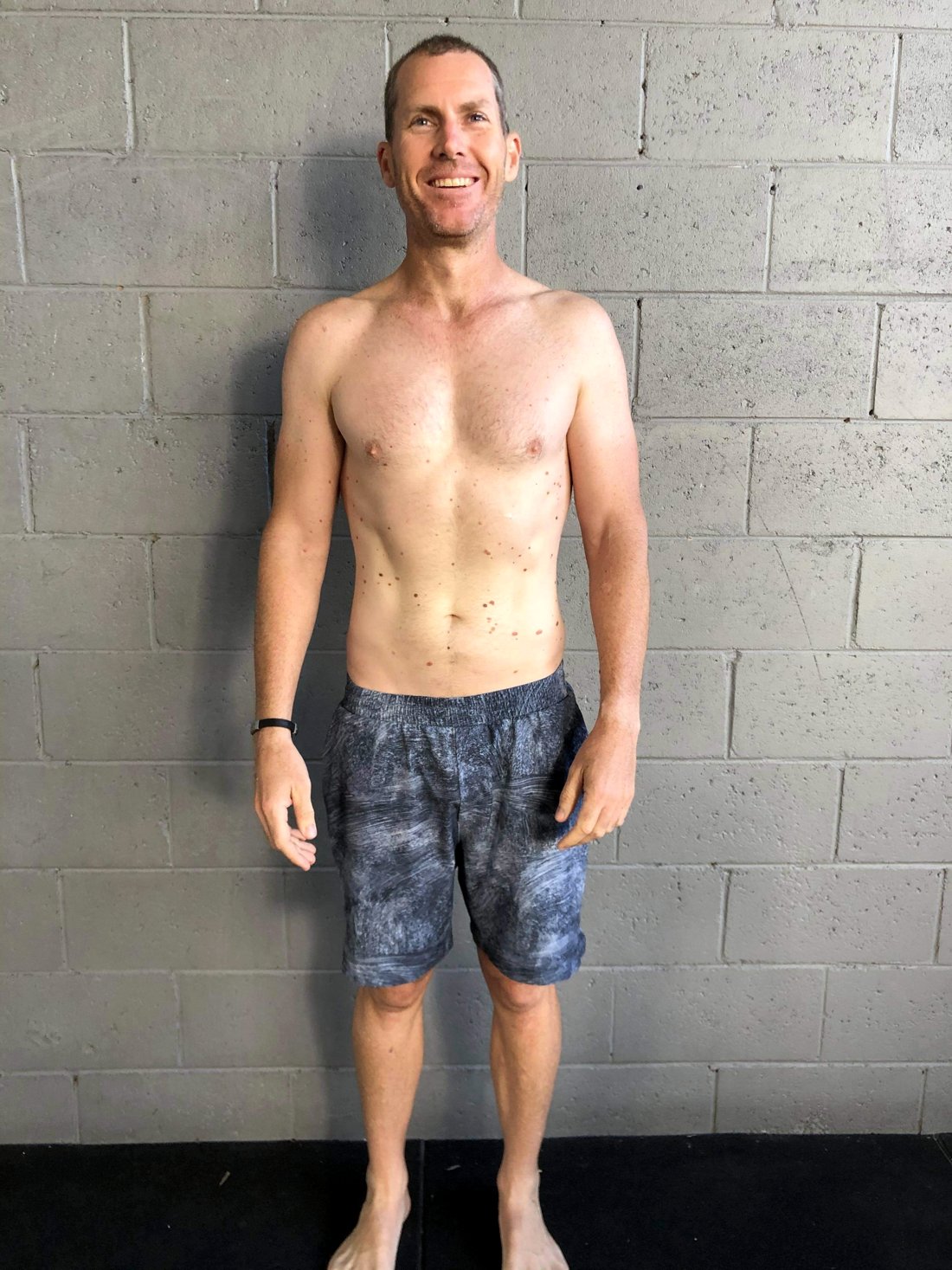
Over one eight-month stretch I had my body composition measured properly with an InBody scanner. The scale barely moved — I sat in the low 80s the whole time — but underneath, fat went down and muscle went up. That’s recomposition, and it’s why I tell you to stop worshipping the scale.
To be clear about this one, because it matters: this stretch was training and protein-first eating alone — no GLP-1s, no peptides. That came years later, in a separate round, and I’ve kept it honest and separate rather than blur the two. The clean method built this.
−5.2kg
Fat lost
Fat mass 15.8 → 10.6 kg.
+1.5kg
Muscle gained
Muscle mass 39.9 → 41.4 kg.
12.8%
Body fat
Down from 18.4%, weight held near 83 kg.
Body composition measured by InBody across five scans, July 2020 – March 2021, on training and protein-first eating — no peptides. My own results, not a promise of yours.
And it shows up where it actually counts — in the blood. I test, I see what’s off, I change one or two things, and I re-test. A couple of markers have sat above optimal and I’m working on them; the metabolic ones look like this:
1.89mmol/L
HDL (good cholesterol)
Reference above 1.0 — higher is protective.
0.8mmol/L
Triglycerides
Reference below 2.0 — low.
2.8
Total : HDL ratio
Lower is better — a low cardiovascular-risk ratio.
0.4mg/L
Inflammation (CRP)
Reference 0–6; under 1.0 signals low risk.
From my own blood panel, June 2026; liver and kidney markers all in range too. These are my results, shared as my story — not medical advice, and not a promise of your results.
That’s the case for doing it the boring way: the numbers move, and they keep moving in the right direction across years, not weeks.
But what about Ozempic, GLP-1s and peptides?
I’ll answer the question every other article on this topic carefully avoids, because it’s the one half of you are actually thinking about.
The honest version: I’ve used them, and I’m transparent about it. My most recent cut — from 93 kilos back down toward 82 — was assisted by GLP-1 medications. So I’m not going to wag my finger and tell you they don’t work or that you’re weak for considering them.
But two things are true at once.
First, they are not a substitute for the foundation. They change your appetite; they don’t build the muscle, the habits or the sleep that keep the weight off when you stop. People who skip the basics and reach straight for a vial get the order backwards, and they get the weight straight back.
Second, the hyped ones let me down. The compound everyone raves about did less for me than the basics — and it sent my resting heart rate climbing and my sleep score off a cliff, so I stopped it. My watch told me before my ego would have. I’ve written the full, honest, unhyped account of all of it — what worked, what was overhyped, and the side effects — over here. What you won’t find there, or here, is a dose or a place to buy anything. That part belongs with a doctor and a blood test, not a blog.
So: foundation first, always. If you go near the rest after that, do it with your eyes open, your doctor in the loop, and your bloods on the table.
How to actually start this week
Enough theory. Here is the first seven days, low-friction by design.
- Find your trigger. You don’t need motivation — motivation is weather. You need a trigger and a plan. Mine have been stupid and perfect: a bet about a pair of jeans, being too heavy to stay on a paddleboard. Yours is whatever makes you genuinely decide. Name it.
- Book a blood test. Before you change anything, get a baseline. You can’t adjust what you haven’t measured, and the number that scares you today is the one you’ll be proud of in six months.
- Do three short sessions. Full-body, big simple lifts, stop two reps short of failure. Forty-five minutes, three times. That’s the week.
- Put protein first at every meal. Don’t overhaul your diet. Just build each plate around protein and let it do the crowding-out for you.
- Walk every morning. Twenty minutes to start. It’s the keystone habit that makes the rest stick.
That’s it. No transformation, no white-knuckle discipline — just a plan small enough that a busy, tired, over-40 version of you will actually do it on a Wednesday.
The bit nobody tells you: the comeback is always available
Here’s what three rounds of this taught me. The drift out of shape after 40 happens to almost everyone with a job and a few decades behind them. It is not a moral failing, it is gravity. And the comeback is always available — at 40, at 46, at 60 — provided you’ve got a trigger and a plan that survives your actual life.
The honesty about losing it more than once isn’t the embarrassing part of my story. It’s the credible part. It means I know the way back works, because I’ve had to find it again and again. You can too.
If you want it written down properly — the twelve-week roadmap, the joint-friendly sessions, the protein-first eating, the supplement stack and the trackers — that’s The Reset. If you’d rather just take the three levers above and run, do that. The method matters more than the product.
FAQ
Is 40 (or 45, or 50) too late to get back in shape?
No. Your body still responds to training and better eating at 40, 50 and beyond — muscle grows, fat comes off, bloods improve. It takes a little more patience and better recovery than it did at 25, but the comeback is available at any age. I rebuilt at 46, and the method was the same one that worked at 30.
Can you build muscle after 40?
Yes. The muscle-building response slows after 40 but it does not switch off. With three full-body strength sessions a week, enough protein, and proper recovery, you can absolutely add muscle in your 40s and 50s. It’s also the single best thing you can do to protect your metabolism and your bones as you age.
How long does it take to get back in shape after 40?
You’ll feel different in two to three weeks — more energy, better sleep, clothes fitting differently. Visible change tends to land around the eight-to-twelve-week mark if you’re consistent. Think in seasons, not weeks. The point isn’t a quick before-and-after, it’s a plan you keep for good.
How often should a man over 40 work out?
Three strength sessions a week is plenty for most men over 40, plus a daily walk and your normal life on top. More isn’t better here — recovery is the limiting factor after 40, and three sessions you complete beats five you burn out on. Quality and consistency, not volume.
Should I take a GLP-1 like Ozempic or tirzepatide to lose weight after 40?
That’s a decision for you and a doctor, not a blog. What I’ll say from experience: they change appetite, but they don’t build the muscle, habits or sleep that keep weight off — so they work best, if at all, on top of the foundation, never instead of it. I’ve used them and written about it honestly, including the side effects that made me stop. Foundation first, doctor in the loop, bloods on the table.
What exercises should you avoid after 40?
Fewer than you’d think — mostly it’s about modifying, not avoiding. I swap a straight bar for a trap bar to spare my back, and I train to roughly RPE 8 rather than to failure. Warm up properly, progress the weight gradually, and respect old injuries. The goal is to still be lifting at 60, which means training in a way your joints will forgive.
Do I need a gym?
No. A trap bar or some dumbbells, somewhere to walk, and a kitchen will do it. The training is deliberately simple equipment so it travels and doesn’t depend on a perfect setup. The barrier to getting back in shape after 40 isn’t the gym — it’s a plan that fits your week.